
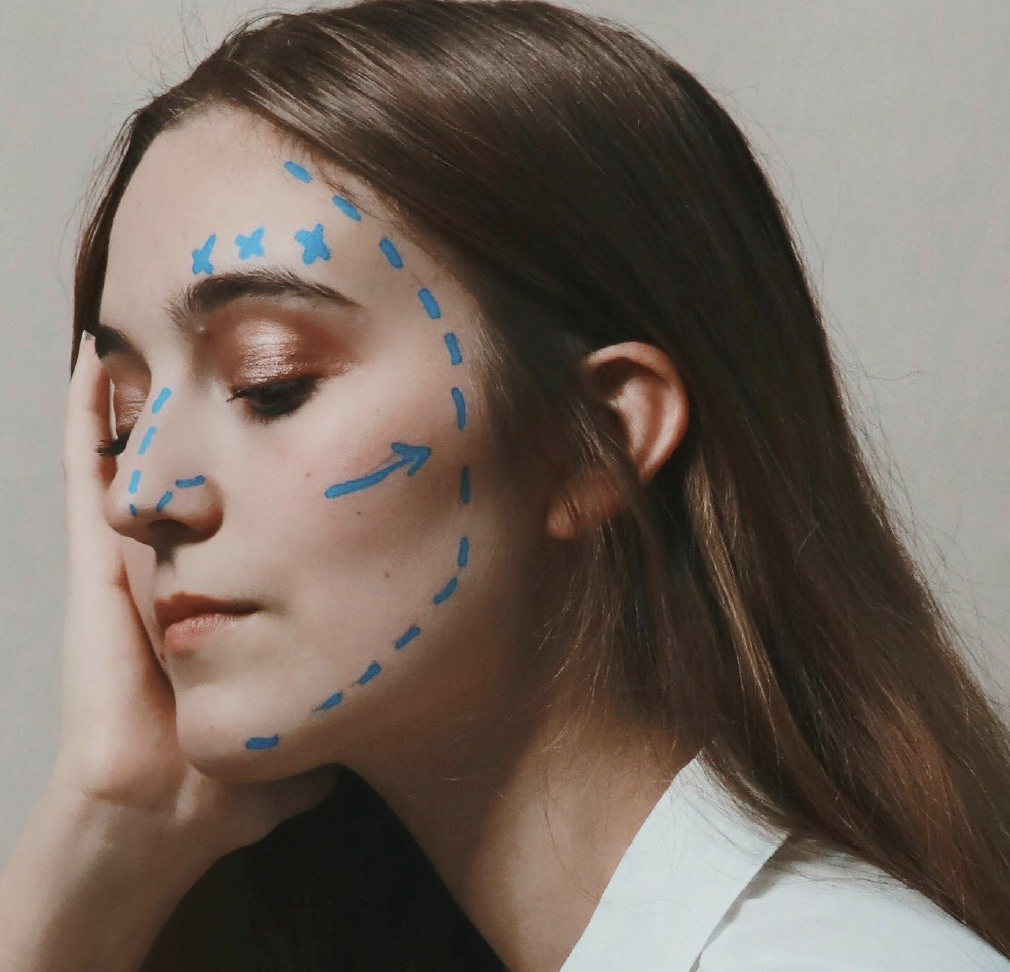
THE BEAUTY ISSUE
Beauty routines are marketed as acts of self-love—a way to pamper oneself, express one’s individuality, and feel confident. Precious, pleasurable moments for the self and the senses. And yet, they also carry the weight of adherence to societal norms and the expectations of those around us. The way we express ourselves through our physical appearance conveys a multitude of messages and may hint at everything from our political identity to our socioeconomic class, cultural interests, and career aspirations.
To find out, Maison BETC surveyed 14,500 adults aged 18 and older in 30 countries. We wanted to explore how people are feeling about the pressures to meet societal beauty standards and how these standards may be shifting. What we uncovered is that beauty is more than skin deep; it’s less about vanity and conformity today and more about empowerment, tapping into societal benefits, and meeting one’s own expectations.

AUTHORITY & FREEDOM
Though coined in the last century, the term was only added to the Cambridge Dictionary in 2023 in recognition of its increased use. People are unsettled and scared, uncertain of what will come next or how to handle the problems already facing us.
To better understand how consumers are coping with these strains and how attitudes are changing, Maison BETC surveyed 14,500 adults aged 18 and older in 30 countries. Our research reveals a growing tension between two fundamental forces: the yearning for freedom and the desire for structure and order.
THE LUXURY ISSUE
The luxury market has long enjoyed a reputation as being “recession-proof.” That perception has been faltering, however, as emerging economic factors—from inflationary pressures to China’s economic downturn—take a toll. In 2023, headlines warned of tougher times ahead.
To be best positioned to advise our client companies, Maison BETC commissioned a survey in nine priority markets in fall 2023: China, France, Germany, Japan, Saudia Arabia, South Korea, the United Arab Emirates, the United Kingdom, and the United States. In all, we surveyed nearly 1,650 consumers, each of whom had spent a minimum of $2,000 on luxury goods in each of the prior two years. These aspirational luxury consumers may not have the spending power of their high-net-worth counterparts, but they collectively account for some 60% of global luxury sales, according to Boston Consulting Group.

THE ALPHA RISE
The world feels harder. Rougher. Less predictable. And when the world shifts, masculinity shifts, too. In a context of geopolitical conflict, economic pressure, and social fragmentation, many men around the world feel something fundamental is slipping away. Not status, exactly. Not power alone. But their sense of self. Their raison d’être.
In early 2026, Maison BETC surveyed 11,000 adults across 25 markets to examine how masculinity is being reshaped—by uncertainty, by culture wars, by social media, and by shifting expectations between men and women. What emerged is not the collapse of masculinity, but its radicalization.

TRAVEL & TOURISM
For those of at least moderate financial means, international travel has become so commonplace that it’s regarded as a standard part of life. Can this trend continue even as the world faces an escalating climate emergency—or will leisure travel become socially and politically unacceptable, an indulgence we can no longer afford?
To find out, Maison BETC surveyed more than 14,000 women and men in 32 markets across Europe, Asia, Africa, and the Americas. Their responses revealed that it will take more than dire forecasts of planetary overheating to pry people—Prosumers especially—out of airplanes and tourist hotspots.

GAMING
What began with a blinking dot in Pong has evolved into a global ecosystem of more than 3.2 billion players and an industry worth $184 billion—larger than film and music combined. And where once gaming borrowed from TV, film, and literature, now the opposite is true, as evidenced by popular titles such as The Last of Us and Fallout. Gaming is no longer a subculture. It is culture. And the most important shift is not economic.It is psychological.
In early 2026, Maison BETC surveyed 11,000 adults across 25 markets to explore a question that would have sounded absurd a decade ago: Has gaming become the cultural space that best reflects contemporary life? The results suggest the answer may be yes.